


Key Takeaways
- Myofunctional therapy uses daily exercises for your tongue, mouth, and throat.
- Snoring often happens when relaxed throat tissue vibrates with airflow.
- These exercises can strengthen airway muscles and encourage nasal breathing.
- Practise 10 to 30 minutes a day, and give it about three months.
- Loud, ongoing snoring with gasping or daytime sleepiness is worth checking.
You climb into bed exhausted, but your partner nudges you awake again because of the noise. Snoring can wear down your rest and strain the people who share your room.
Floss Bosses offers myofunctional therapy that can help reduce snoring for some people by strengthening the muscles that keep your airway open, though it works alongside your doctor’s care, not in place of it. Here’s how it works and what you can expect.
What Myofunctional Therapy Actually Is
Myofunctional therapy is a set of daily exercises for your tongue, mouth, and throat. Some people call it mouth and throat exercises.
A trained therapist teaches you the movements and shows you how to practise them at home. Over time, the routine becomes part of your day, much like brushing or flossing.
Why You Snore in the First Place
When you sleep, the soft tissue in your throat relaxes. Air moving past that loose tissue can make it vibrate, and that vibration is the sound you hear as snoring.
Sleep position plays a part too. Congestion and mouth breathing can also add to the noise on any given night.
Common Reasons Behind Snoring
Snoring often comes down to a few common factors. Knowing what’s behind yours can help you and your therapist plan a routine that fits.
- Weak or overly relaxed airway muscles
- Poor tongue posture during sleep
- Alcohol, sedatives, or natural changes with age
How Myofunctional Therapy May Reduce Snoring
The exercises focus on the muscles that help keep your airway open while you sleep. Stronger muscles are less likely to relax, narrow your airway, and vibrate.
The routine also encourages nasal breathing instead of mouth breathing. Keep in mind that this therapy supports doctor-recommended treatments rather than replacing them.
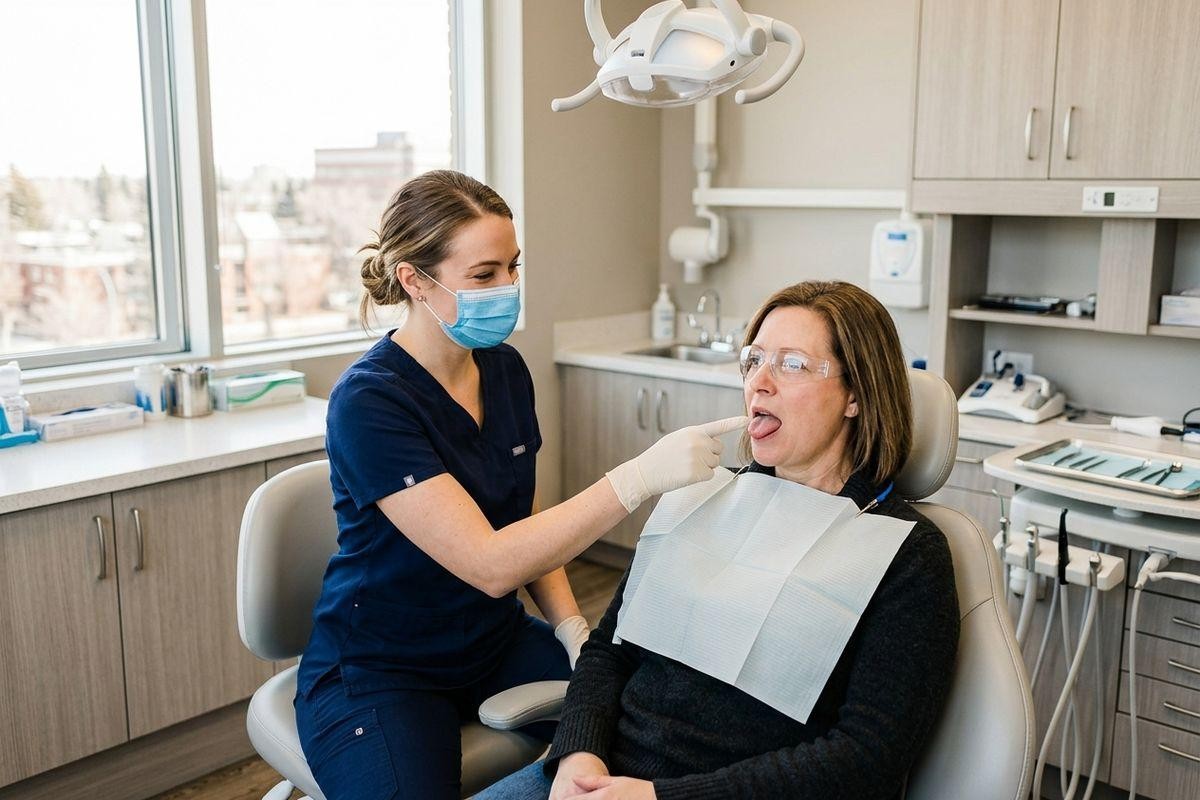
Sample Exercises You Can Try
These give you a feel for the kind of movements involved, and your therapist will show you the right form for each one.
- Tongue slides and stretches
- Cheek and jaw movements
- Vowel sounds and singing
What to Expect From Results & Timing
Plan to practise 10 to 30 minutes each day. Consistency matters more than long sessions.
Give the routine about three months before you judge how it’s working. Results vary from person to person, since the shape of your mouth and throat affects how much change you notice.
When Snoring Signals Something More
Sometimes snoring points to sleep apnea, a sleep issue worth a closer look. Watch for these signs and mention them to your doctor.
- Gasping or choking during sleep
- Daytime sleepiness or morning headaches
- Loud, ongoing snoring that won’t settle
Myofunctional Therapy at Floss Bosses in Edmonton
At Floss Bosses, the team offers personalized guidance for your snoring concerns and builds a routine around your needs, in a comfort-first space where questions are welcome.
If snoring keeps you or a loved one up at night, reach out to Floss Bosses in Edmonton to book your visit and see how myofunctional therapy might fit into your care.
