

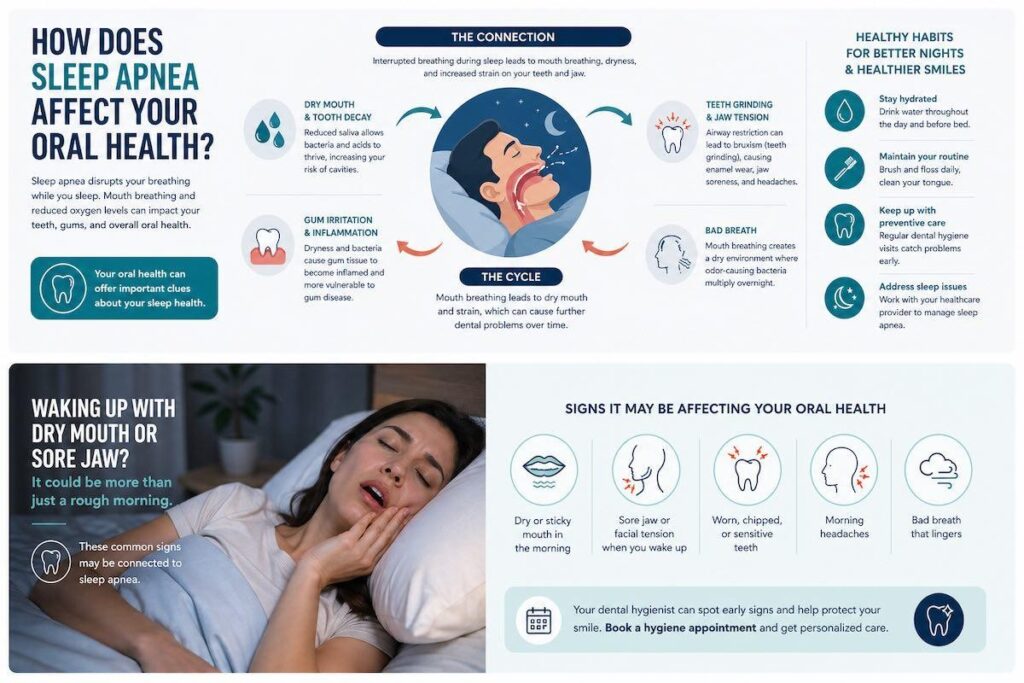
Waking up with a dry mouth, a sore jaw, or breath that won’t quit can feel like a random morning nuisance. Often, these frustrations point to exactly what’s happening while you sleep. Sleep apnea quietly puts your oral health under pressure night after night, and the signs are usually hiding in plain sight.
Sleep apnea affects your oral health by reducing saliva, promoting teeth grinding, and creating conditions where gum disease and bad breath can take hold. The good news is that a dental hygiene appointment can help uncover these signs early and give you a clear path forward.
If you suspect mouth breathing or airway issues are part of the picture, our Buteyko Self Check can help you assess your breathing patterns at home.
The Link Between Sleep Apnea & Your Mouth
Sleep apnea interrupts your breathing repeatedly throughout the night. When that happens, your body often shifts to mouth breathing just to keep air moving. That shift might seem harmless, but your mouth pays a real price over time.
Your teeth, gums, and soft tissues rely on a steady, moist environment to stay healthy. Mouth breathing dries everything out and disrupts that balance. Over weeks and months, the effects start to show up in ways your hygienist can see clearly.
Oral Health Problems Tied to Sleep Apnea
Several common dental issues stem directly from the way your body compensates for interrupted breathing during the night.
Dry Mouth & Tooth Decay
Saliva does more than keep your mouth comfortable. Saliva acts as your mouth’s primary defence system by washing away food particles, neutralizing acids, and protecting your enamel. When mouth breathing reduces your saliva flow, that protection disappears for hours at a time.
Without enough saliva, bacteria thrive and acid levels rise, which speeds up tooth decay. Pay attention if your teeth feel sensitive or your mouth feels sticky when you wake up. Mention these signs during your next cleaning, as Guided Biofilm Therapy can help manage the buildup that dry mouth makes worse.
Teeth Grinding & Jaw Tension
Sleep apnea and teeth grinding, known as bruxism, often go hand in hand. When your airway becomes restricted during sleep, your jaw muscles can tense up as your body tries to reopen it. That tension often turns into grinding before morning comes.
Grinding wears down your enamel gradually, and once enamel is gone, it does not grow back. Watch for flattened tooth edges, jaw soreness, or morning headaches. These are clear signals that something more than just stress might be affecting your sleep and your teeth.
If jaw tension and grinding are persistent, TMJ-focused care can help address the muscle dysfunction that often comes with sleep-related breathing issues.
Gum Irritation & Inflammation
Dry conditions from mouth breathing leave your gum tissue irritated and more vulnerable to bacteria. When your gums lose their natural moisture, small areas of inflammation can develop and grow. Left unaddressed, that inflammation can progress toward gum disease.
Diagnosing gum irritation early can mean less involved care later and a much more comfortable experience overall. Your hygienist can spot these early indicators during a regular checkup.
How Bad Breath Connects to Sleep Apnea
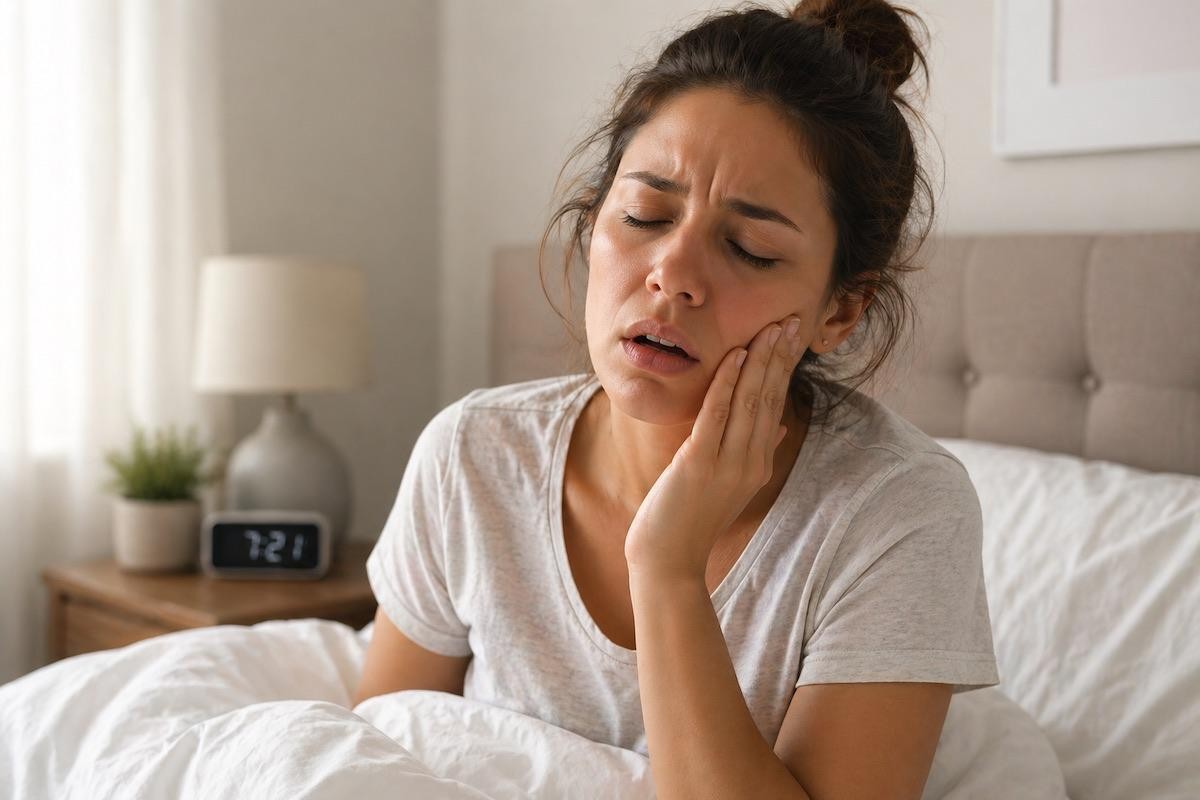
Morning breath is normal to a degree, but persistent bad breath that lingers past your morning routine is worth paying attention to. Overnight mouth breathing creates warm, dry conditions where odour-causing bacteria multiply quickly. By the time you wake up, that bacterial activity has had hours to build.
Identifying whether your bad breath has a deeper source, such as oral biofilm or gum inflammation, makes it much easier to treat effectively. This isn’t a symptom you need to just live with.
What About Kids?
Sleep apnea isn’t just an adult issue. Children can experience airway and breathing problems too, but the signs often look different than what you’d notice in an adult.
Instead of complaining about poor sleep, kids tend to show signs through their behaviour or oral development. Watch for:
- Snoring or noisy breathing during sleep
- Mouth breathing during the day or night
- Restless sleep or frequent waking
- Difficulty focusing, irritability, or behaviour that resembles
- ADHD A narrow palate, crowded teeth, or chronic mouth dryness
- Dark circles under the eyes despite enough sleep
Chronic mouth breathing in particular can shape how a child’s face and jaw develop over time. Catching these patterns early gives you more options to support healthy breathing, sleep, and oral development.
At Floss Bosses, we see infants for airway and breathing assessments and work with kids ages 2 and up, including neurodivergent children, to address these concerns proactively.
What a Dental Hygiene Appointment Can Reveal
A dental hygiene appointment is about more than a cleaning. During a preventive visit, your hygienist can notice worn enamel, dry or receding gum tissue, and inflammation that might point to sleep-related habits. These details give you a fuller picture of what is happening in your mouth.
Oral biofilm therapy, including saliva and biofilm testing, can measure bacterial activity levels that aren’t visible to the naked eye. That information helps shape a care plan that fits what your mouth actually needs, not just a general routine.
Myofunctional Therapy as a Support Option
Myofunctional therapy focuses on the muscles of your mouth, tongue, and face. It can help retrain tongue posture and breathing patterns that contribute to mouth breathing and airway issues during sleep. It addresses the habits that feed the cycle, not just the symptoms.
Steps You Can Take to Protect Your Oral Health
There are practical things you can do between appointments to reduce the impact of sleep apnea on your mouth. Focus on these daily habits: Staying well hydrated throughout the day can help offset overnight dryness and keep your saliva doing its job. Rinsing with water before bed can also help.
- Drink water consistently throughout the day and before sleep to keep tissues hydrated.
- Book routine preventive visits to monitor changes in your enamel and gum health over time.
- Mention morning symptoms like dry mouth or jaw soreness to your hygienist so they can tailor your care.
- Ask about oral biofilm testing if persistent bad breath is a concern.
- Explore myofunctional therapy if you notice a consistent pattern of mouth breathing.
Start Your Journey to Better Health
Your sleep and your oral health are more connected than most people realize. Understanding what your mouth is telling you is the first step toward feeling better and protecting your smile.
Schedule a visit with Floss Bosses today. Let’s look at what your oral health can tell us about your overall well-being and build a care plan that works for your life!
