

Key Takeaways
- SDF is a liquid brushed onto tooth spots to help slow early decay.
- The application is simple, with no drilling or local freezing needed.
- It can suit kids, adults with active decay, and people who feel nervous at appointments.
- Treated areas may turn dark, which is expected and often indicates that the SDF has helped arrest the decay. Repeat visits may still be needed.
- A follow-up visit may be recommended, and referrals are available if restorative care is needed.
What SDF Treatment Means for You
If dental treatment makes you tense up in the chair, the team at Floss Bosses offers a gentler way to help manage early tooth decay.
Silver diamine fluoride, or SDF, is a liquid that gets brushed onto affected tooth spots to help slow or arrest early decay and ease sensitivity, all without drilling or local freezing. It gives you a calm option when you want to manage a cavity early, backed by preventive dental care that helps keep small problems small.
How SDF Treatment Works
The process is simple. The team paints a small amount of the liquid onto the spot where decay has started.
From there, the SDF gets to work in a few clear ways.
- It goes right onto the affected tooth spots.
- It helps slow or arrest early decay.
- It can help sensitive teeth feel more comfortable.
What to Expect During an SDF Visit
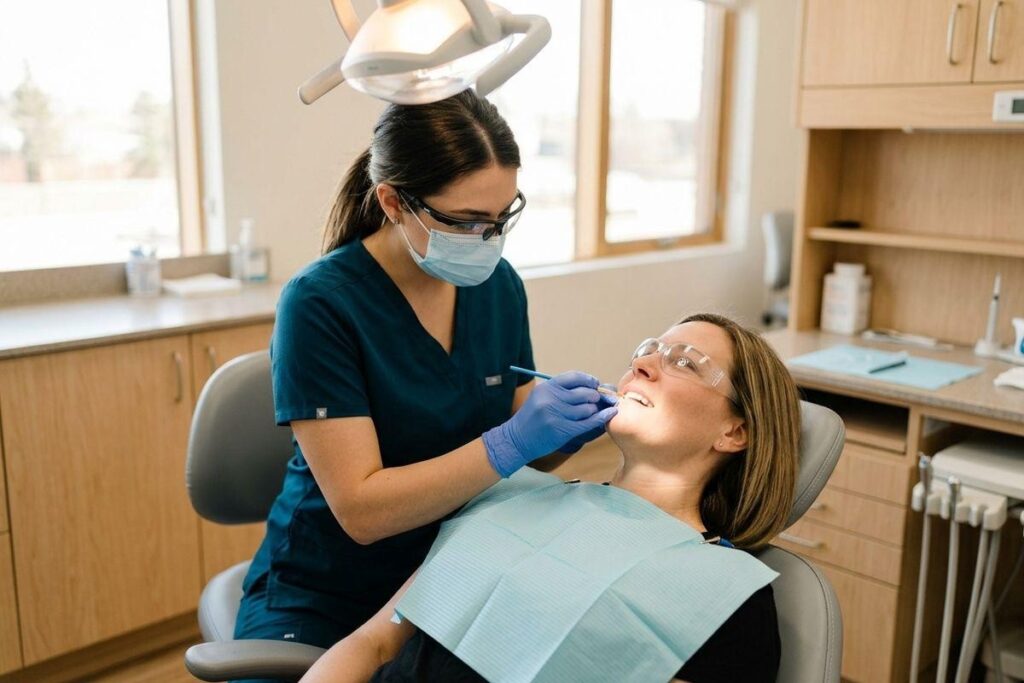
The appointment is simple. SDF is applied with a small brush, and no drilling or local freezing is needed.
Here’s how a typical visit goes.
- The team applies the liquid with a tiny brush.
- No drilling or local freezing is needed.
- The tooth absorbs the treatment in a short time, and then you’re done.
Most people are in and out quickly, which makes it a friendly choice for busy families.
Who Can Benefit From SDF Treatment
SDF fits some situations better than others. Knowing where you land can help you feel ready before your visit.
Good Fit for SDF
This treatment can suit a wide range of people.
- Kids and adults with active decay.
- Those who feel dental anxiety or get nervous in the chair.
- People with cavities that sit in hard-to-reach spots.
When SDF May Not Suit You
There are times when another approach or a referral may make more sense. Talk with our hygienists if any of these apply to you.
- You have a silver allergy.
- The decay sits deep or close to the nerve.
- You are pregnant or breastfeeding.

Benefits & Drawbacks of SDF
Every option comes with trade-offs, and SDF is no different. Here’s an honest look so you can decide what feels right.
Upsides to Consider
SDF has a few clear advantages that draw people in.
- It’s a lower-intervention and non-invasive option.
- It can help slow early decay without drilling.
- It can ease tooth sensitivity.
Things to Keep in Mind
A couple of side effects are worth knowing about ahead of time.
- Treated spots turn dark or black.
- Temporary skin or gum staining can happen.
- Repeat visits may be needed.
The dark colour is the main surprise for most people, so it helps to picture it before you commit. In a decayed area, that darkening often indicates that the SDF has reacted with the tooth and helped arrest the decay.
It does not restore the tooth, so follow-up care may still be needed.
How Long SDF Lasts & Follow-Up Care
SDF isn’t a one-and-done fix, and that’s okay. A little follow-up keeps things on track.
Here’s what the care plan can look like.
- A follow-up visit may be recommended.
- Reapplication may help keep early decay under control.
- If a filling or other definitive restorative care is needed later, we can refer you to a dentist.
This flexibility means you can start with a low-stress option and still get referred for additional care if your tooth needs it.
If a low-stress way to help manage early tooth decay sounds like a good match, the team at Floss Bosses would love to talk it through with you. Book a visit today to learn whether SDF is a good fit for your preventive dental hygiene care.
